Banks and lenders need proof of stable income before approving a mortgage, car loan, or credit line. A generic employment certificate sometimes isn’t enough — lenders usually want specific fields verified.
When you are applying for a mortgage or trying to secure a personal loan, banks don’t just take your word for it when it comes to your finances. They need proof. That is exactly why financial institutions require a formal employment verification letter for loans and bank applications.
Based on my experience designing these over the years, lenders are incredibly specific about the information they want to see. They are looking for clear proof of income and job stability to evaluate your debt-to-income ratio and make sure you can handle the monthly payments. If your proof of employment lacks the right details, your credit application can get stalled—well, or rejected entirely.
What banks typically require
- Confirmation of employment status (permanent, contract, probation)
- Length of continuous employment
- Gross monthly/annual income
- HR or supervisor contact details for verification calls
- Company letterhead and an authorized signature
Free Templates
What you get here is a professional job verification letter template designed specifically to meet strict banking standards. It includes dedicated sections for your current employment status, exact job title, date of hire, and a clear breakdown of your base salary and recurring bonuses. I kept the font simple and ensured the margins are perfectly aligned so it looks completely official when printed on your company letterhead.
I have made this template completely free to download in Word and PDF formats. I put this together so you don’t have to start from scratch. Grab it, have your HR department fill it in, and hopefully, this saves you some time and helps you get your loan approved without any fuss.

Storekeeper Employment Certificate with Performance Review
File Type: MS Word {Zip File}
File Size: 137 KB

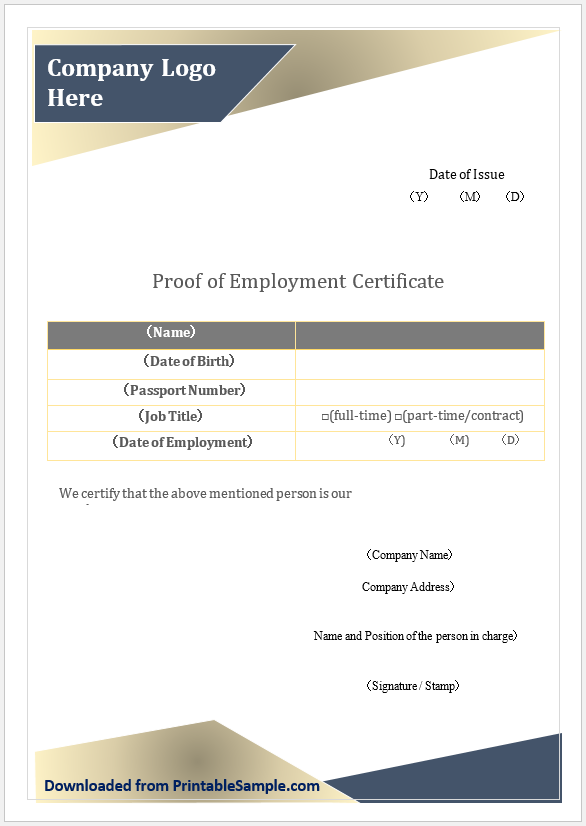
Professional Employment Certificate Design
File Type: MS Word {Zip File}
File Size: 842 KB

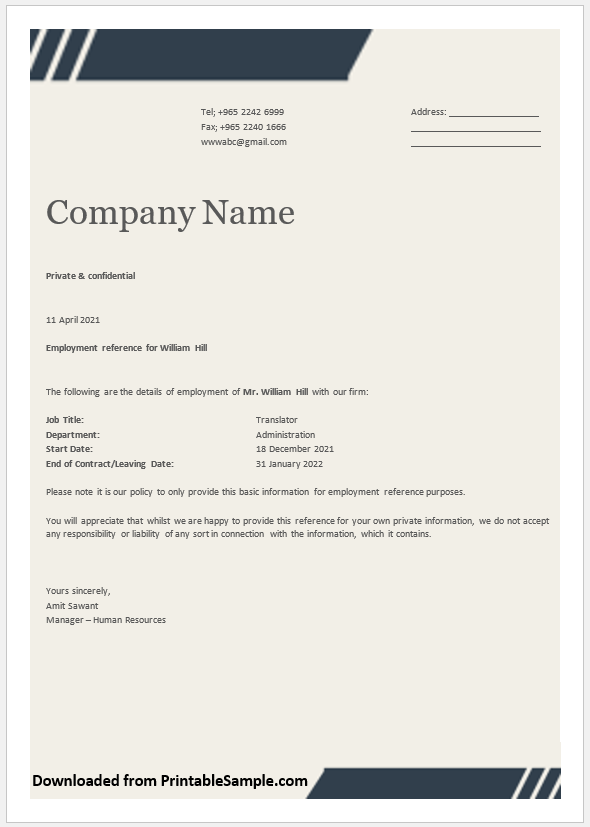
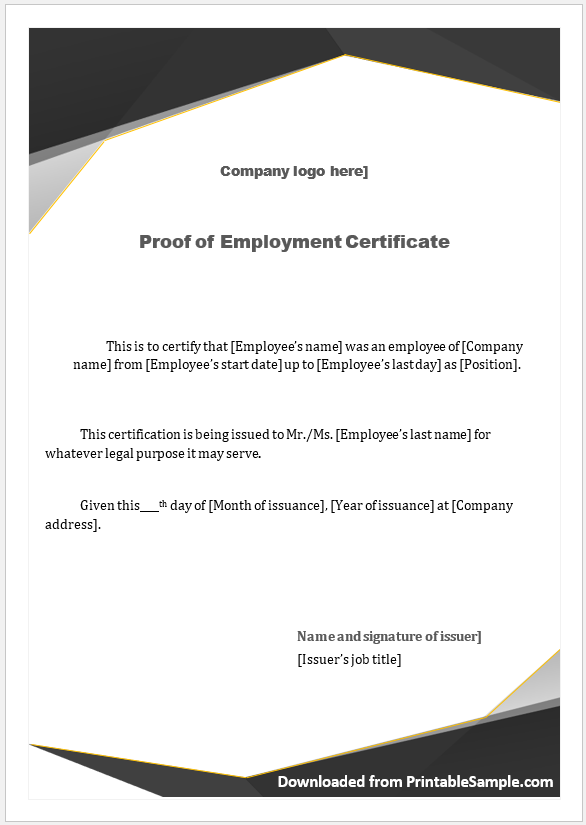
Employment Experience Certificate Template
File Type: MS Word {Zip File}
File Size: 277 KB

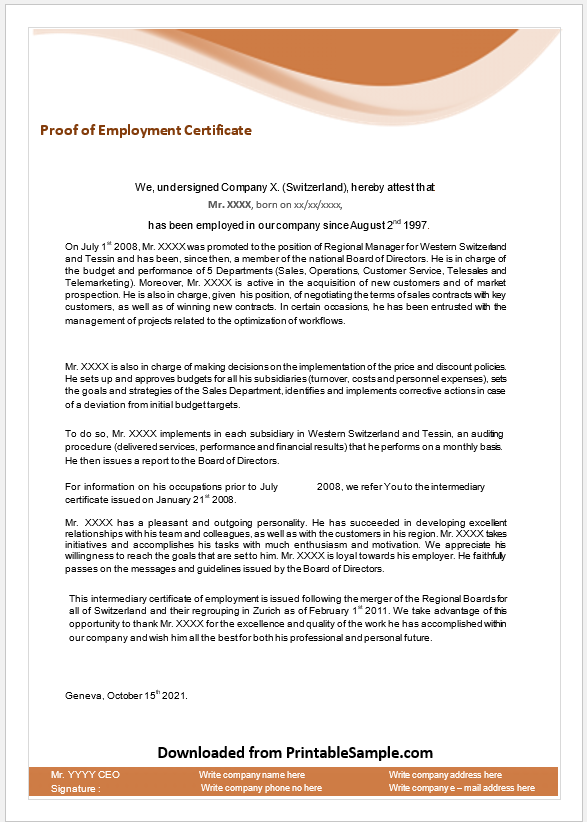
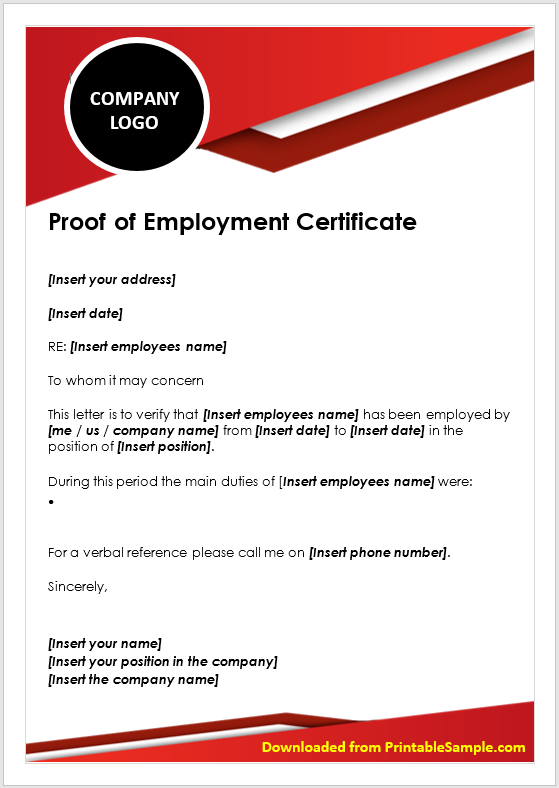

Employment Completion Certificate Template
File Type: MS Word {Zip File}
File Size: 27 KB
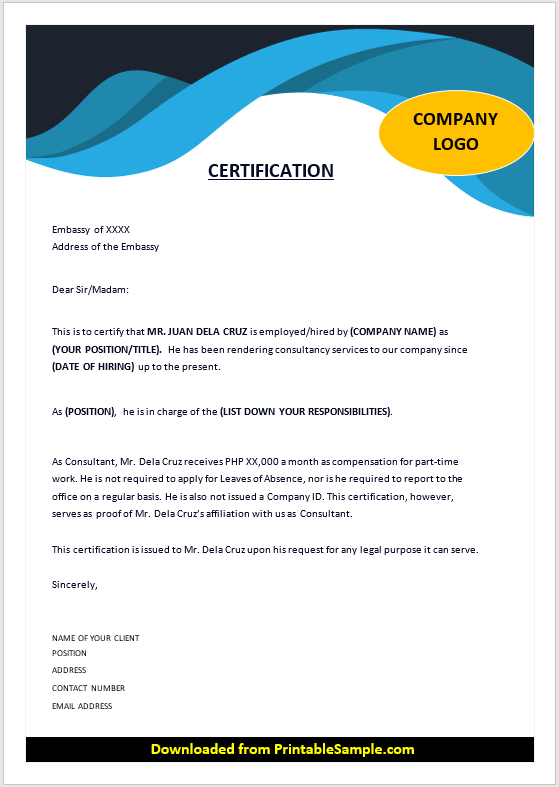
Employee Confirmation Certificate Format
File Type: MS Word {Zip File}
File Size: 425 KB
Related documents
- Need the standard version without salary details? Employment Certificate →
- Need salary broken down by allowances/deductions? Salary Certificate →
- Applying while self-employed instead? Income Certificate →
Frequently Asked Questions
Why do banks require an employment verification letter for a loan?
Lenders need to minimize their risk before handing over large sums of money. They use this letter to confirm two main things: that you have a steady stream of income to cover your monthly payments, and that your job stability is solid. In all my time putting these together, one thing that keeps coming up is that banks just want to verify that your employment status is active and that your stated income matches what you put on your credit application.
Can I write my own job verification letter for a bank application?
You can draft the text using one of my templates to speed up the process, but you cannot sign it yourself. The letter must be reviewed, finalized, and signed by an authorized person at your company—usually an HR manager, a payroll officer, or the business owner. Let me be straightforward about this: if a loan officer spots that you signed your own verification letter, your loan application will be flagged for fraud immediately.
What happens if the bank calls my employer to verify the letter?
That is actually a standard part of the underwriting process. Loan officers routinely call the contact number listed on the letter to double-check that the information is accurate. When they call, they usually just ask HR to confirm your hire date, your job title, and whether you are still working there. I know this for sure from my own past experience, so make sure the phone number you include connects directly to someone who can answer those questions.
Does a loan verification letter have to show my full salary breakdown?
Yes, most banks prefer to see a clear breakdown. They don’t just want a single lump sum; they want to see your base salary separated from things like performance bonuses, commissions, or housing allowances. This matters because lenders calculate your debt-to-income ratio using your guaranteed base pay, and they treat fluctuating bonuses differently. My template includes a neat table to keep these numbers clearly separated.
How fresh does the verification letter need to be for a mortgage application?
It needs to be very recent. Over the years I have noticed that financial institutions are incredibly strict about timelines, and most will reject an employment letter if it is older than 30 days. Because mortgage approvals can sometimes take a few weeks, I always tell people to get this letter signed at the very last minute right before submitting the final paperwork—well, or be prepared to ask HR for an updated copy if the bank processing drags on.
