Download these 8 free house maintenance checklist templates to organize routine home upkeep, seasonal inspections, repairs, cleaning, and preventive maintenance. The collection includes Microsoft Word, Excel, and PDF formats that can help homeowners track recurring tasks throughout the year.
Regular home maintenance does not eliminate every future repair, but it can help you notice problems earlier, reduce avoidable damage, and keep important systems in better condition. A written checklist is especially useful because many household tasks only need attention every few months or once a year and are easy to forget.
If you need a broader format for maintaining equipment, vehicles, buildings, or other assets, browse our general maintenance list templates. For everyday household duties rather than repairs and inspections, our household chores list templates may be more suitable.
What Is a House Maintenance Checklist?
A house maintenance checklist is a structured list of recurring tasks used to monitor the condition of a home and its systems. It may include inspections, cleaning, servicing, repairs, replacements, and seasonal preparation.
The checklist can cover areas such as plumbing, roofing, gutters, heating and cooling, electrical systems, appliances, windows, doors, exterior surfaces, landscaping, safety equipment, and general household upkeep.
The most useful lists separate tasks by frequency. Some jobs may need attention every month, while others are seasonal, semiannual, or yearly.
What Should a Home Maintenance List Include?
A practical maintenance list should make it easy to see what needs attention, when it was last checked, and when it should be reviewed again.
Maintenance Task
Describe each task clearly. Instead of writing only “HVAC,” use wording such as “inspect or replace HVAC filter according to system requirements” or “schedule heating system service if due.”
Location or System
Identify the part of the home involved, such as kitchen, bathroom, roof, exterior, basement, electrical system, plumbing, or heating and cooling.
Frequency
Use a frequency that fits the actual task. Common categories include monthly, quarterly, semiannual, seasonal, and annual.
Manufacturer guidance, local climate, equipment age, and usage may all affect how often a particular item should be checked or serviced.
Last Completed Date
Recording the completion date creates a simple maintenance history and prevents unnecessary repetition.
Next Due Date
A next-due field can turn the checklist into a working schedule. You can also transfer important dates into one of our schedule templates or a printable planner so upcoming work is easier to remember.
Notes and Repairs Needed
Leave room to document leaks, unusual noises, wear, damage, replacement parts, professional recommendations, or other follow-up work.
8 Free House Maintenance Checklist Templates
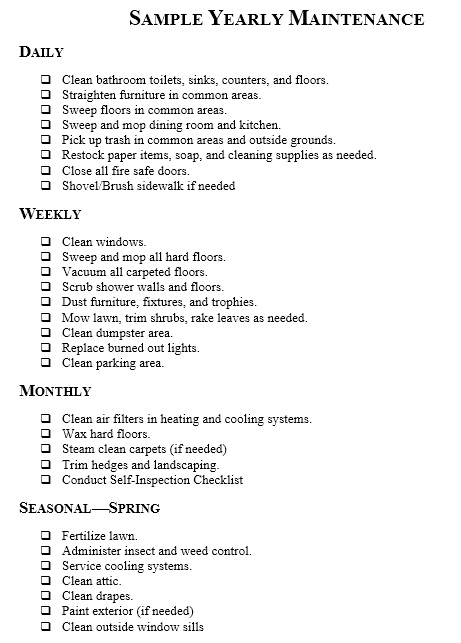
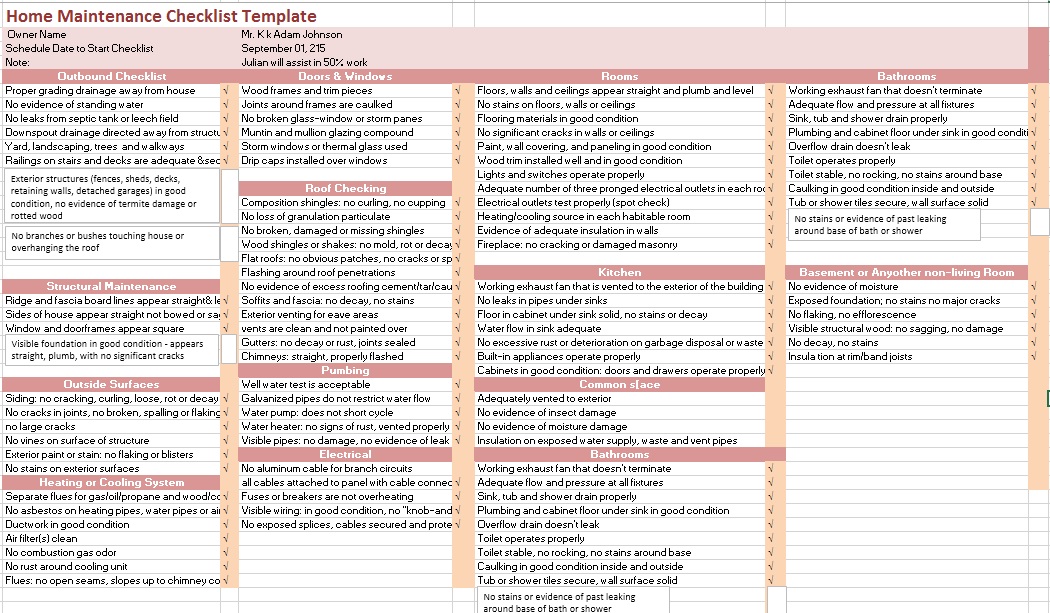
The following eight downloads come from the existing PrintableSample house-maintenance collection. The first is identified as a Microsoft Word file, the next three as Microsoft Excel templates, and the remaining four as PDF formats.
The layouts include yearly schedules, general home-maintenance checklists, preventive-maintenance forms, and healthy-home inspection lists.


How to Create a Home Maintenance Schedule
Start by listing the main systems and areas of your home. Think about heating and cooling, plumbing, electrical systems, roof and gutters, exterior surfaces, appliances, safety equipment, windows, doors, and outdoor areas.
Next, assign a realistic frequency to each task. Avoid putting everything on a monthly schedule simply because monthly reminders are easy to create. Some items require frequent attention, while others may only need seasonal or annual inspection.
Monthly Tasks
Monthly checks can include tasks that are quick to inspect and may affect day-to-day operation. Examples may include checking for visible plumbing leaks, reviewing frequently used appliances, inspecting ventilation openings, and confirming that important household systems appear to be operating normally.
Filter replacement should follow the requirements of the particular HVAC system and filter rather than a single universal interval.
Quarterly Tasks
Quarterly maintenance may include checking less frequently used fixtures, examining exterior areas for developing damage, reviewing drains, inspecting weather sealing, and completing other tasks appropriate to the property and season.
Semiannual Tasks
Some homeowners use spring and fall as convenient times for broader inspections. These may include gutters, exterior drainage, heating or cooling preparation, window and door seals, and selected safety checks.
Annual Tasks
Annual tasks may include professional servicing, detailed exterior inspections, appliance checks, pest-related inspections, roof observations, and other work that does not need to be repeated throughout the year.
The correct schedule will depend on your house, equipment, climate, and manufacturer recommendations.
Seasonal House Maintenance Checklist
Seasonal planning can make a long maintenance list much easier to manage. Instead of trying to do everything at once, divide tasks according to the time of year when they are most useful.
Spring Home Maintenance
Spring is a useful time to inspect the property after colder or wetter weather. Check the roof and exterior from a safe location for visible damage, look for drainage problems, inspect gutters where appropriate, and check windows, doors, screens, and outdoor fixtures.
If cooling equipment will be used during warmer months, prepare it according to manufacturer guidance or arrange professional servicing when required.
Summer Home Maintenance
Summer tasks often focus on exterior areas, cooling performance, landscaping, decks, patios, and repairs that require dry weather.
Check for water leaks, signs of pests, drainage problems, damaged exterior surfaces, or other issues that may worsen if ignored.
Fall Home Maintenance
Fall is often a useful time to prepare for colder or wetter conditions. Depending on your climate, this may include clearing leaves and debris, checking exterior drainage, preparing heating systems, examining weather seals, and addressing outdoor repairs before winter.
Winter Home Maintenance
Winter maintenance depends heavily on local climate. In colder areas, homeowners may need to monitor freezing risks, snow or ice accumulation, heating performance, and exterior drainage.
In mild climates, winter may instead be a convenient time for indoor inspections, appliance maintenance, painting, organizing repair records, or scheduling professional work.
Home Maintenance vs. Household Chores
House maintenance and household chores overlap, but they are not exactly the same.
Household chores are routine activities such as cleaning rooms, doing laundry, washing dishes, taking out trash, and organizing living spaces.
Maintenance focuses more on preserving the condition and operation of the property. Examples include inspecting plumbing, servicing equipment, checking gutters, repairing seals, replacing worn components, and addressing developing defects.
If your main goal is organizing cleaning and daily household responsibilities, see our printable household chores list templates.
Keep a Home Maintenance History
A checklist becomes more valuable when it records what was actually completed. Keep dates, notes, receipts, warranties, service reports, and contractor information for important repairs or maintenance.
For major systems, note when equipment was installed, last serviced, repaired, or replaced. This makes it easier to answer questions later and can help prevent repeated troubleshooting.
Record Professional Service
When a plumber, electrician, HVAC technician, roofer, or other professional performs work, record the date, company, work completed, and any follow-up recommendation.
This is particularly useful for work that should not be performed as a casual DIY task.
When to Hire a Professional
Many basic household checks and cleaning tasks can be handled by homeowners, but not every maintenance job is suitable for DIY work.
Electrical repairs, gas systems, significant roofing work, structural concerns, complex HVAC servicing, major plumbing problems, and other hazardous or regulated work may require a qualified professional.
A maintenance checklist should help you notice and schedule work; it should not encourage you to perform tasks that exceed your knowledge, equipment, or safe access.
Using Reminders for House Maintenance
A yearly checklist is much easier to follow when important tasks are transferred to a calendar or planner. Add recurring reminders for seasonal and periodic work rather than relying on memory.
Our schedule templates can help organize maintenance dates, while the planner templates are useful if you want to combine maintenance with other household appointments and responsibilities.
When a task is completed, record the date and schedule the next review if appropriate. Over time, this creates a maintenance history that reflects the actual needs of your home rather than a generic list.
Frequently Asked Questions About House Maintenance Checklists
1. What is a house maintenance checklist?
A house maintenance checklist is a structured list of inspections, cleaning, servicing, repair, and preventive tasks used to help maintain a home and its systems.
2. How often should home maintenance be performed?
There is no single interval for every task. Some items may need monthly attention, while others are quarterly, seasonal, semiannual, or annual. Follow equipment instructions and adjust the schedule for your climate and property.
3. What should be included in a yearly home maintenance list?
A yearly list may include plumbing, heating and cooling, roof and gutters, electrical systems, appliances, exterior surfaces, windows and doors, drainage, safety equipment, and any recurring professional service.
4. Is home maintenance the same as house cleaning?
No. Cleaning focuses mainly on keeping living spaces clean and organized, while maintenance includes inspections, servicing, repairs, and preventive work intended to preserve the condition of the home.
5. Should house maintenance be organized by season?
Seasonal organization can be very useful because many tasks are linked to weather. Spring and fall are common times for exterior checks and preparing heating or cooling systems.
6. Can I create a home maintenance schedule in Excel?
Yes. Excel is useful for keeping task names, frequencies, last-completed dates, next-due dates, notes, and costs in one place. Three templates on this page are identified as Microsoft Excel formats.
7. Should I keep records of completed maintenance?
Yes. Completion dates, service records, receipts, warranties, contractor details, and repair notes can create a useful history of the property.
8. Can regular maintenance prevent every home repair?
No. Components can still fail or wear out unexpectedly. Preventive maintenance can help identify some problems earlier and reduce avoidable deterioration, but it cannot eliminate all future repairs.
9. Which home maintenance jobs should be done by professionals?
Tasks involving significant electrical, gas, structural, roofing, HVAC, plumbing, or other safety hazards may require qualified professionals. Follow local requirements and manufacturer guidance.
10. How can I remember seasonal home maintenance tasks?
Add important tasks to a calendar, schedule, or planner and create recurring reminders where appropriate. Record the completion date so you know when each item was last checked.
