Download these 10 free wholesale price list templates to create a clear pricing document for bulk buyers, retailers, resellers, distributors, and business customers. The collection includes Microsoft Word and Excel layouts that can be adapted for products, inventory, grocery items, supplies, and other goods sold in larger quantities.
A wholesale price list helps buyers understand what products are available, how much they cost at different quantities, and what conditions apply before placing an order. Unlike a simple retail price list, a wholesale version may include minimum order quantities, case or pack sizes, volume discounts, reseller rates, and payment or delivery terms.
If you need a more general pricing format for services or standard customer rates, browse our service price list templates. Wholesale price lists are more useful when pricing depends on quantity, buyer type, or bulk-order thresholds.
What Is a Wholesale Price List?
A wholesale price list is a document that shows the prices offered to customers who purchase products in larger quantities or meet specific trade requirements. These customers may be retailers, distributors, resellers, institutions, or other businesses rather than individual consumers.
Wholesale prices are often lower than retail prices because the buyer is purchasing a larger quantity. However, the exact pricing model can vary. Some suppliers use one wholesale rate for all approved buyers, while others offer several pricing tiers depending on order volume.
For example, a product may cost one amount when 12 units are ordered, a lower unit price at 50 units, and an even lower price when 100 or more units are purchased. A clear wholesale price list makes those differences easy to understand.
Wholesale Price vs. Retail Price
The retail price is generally the price charged to an individual customer buying a small quantity for personal use. The wholesale price is usually offered to buyers purchasing larger quantities, often for resale or business use.
A wholesale price does not always have to appear beside the retail price. Some businesses show both so resellers can see the difference, while others distribute a separate wholesale-only list to approved trade customers.
What Should a Wholesale Price List Include?
A good wholesale price list should make ordering easier. Buyers should be able to identify a product, determine the relevant quantity, see the unit or case price, and understand any conditions that affect the order.
Business Information
Include the company name, logo, address, phone number, email address, website, and other useful contact information. If wholesale orders are handled by a dedicated sales representative or department, include those contact details as well.
Product Name and SKU
Each product should have a clear name and, where possible, a SKU, item code, model number, or other reference. Product codes make ordering easier when several products have similar names or variations.
Unit, Pack or Case Size
State how the product is sold. A buyer needs to know whether the quoted price applies to a single unit, pack of six, carton of 12, case of 24, pallet, kilogram, meter, or another measure.
Minimum Order Quantity
If buyers must purchase a minimum quantity to receive wholesale pricing, show that requirement clearly. You can use a minimum order quantity, often called MOQ, for each individual item or for the whole order.
Wholesale Price
Show the unit, pack, case, or bulk price in a consistent format. If taxes, freight, or delivery charges are not included, state that clearly rather than allowing buyers to assume they are part of the quoted price.
Tiered Pricing
If larger orders qualify for better pricing, show the tiers in separate columns. For example, you might display rates for 1-11 cases, 12-49 cases, and 50 or more cases.
Tiered pricing is especially useful because it shows buyers the financial benefit of increasing their order without requiring them to request a separate quotation each time.
Price Validity
If prices are only valid until a certain date, include a valid-through date or price-list effective date. This is useful when costs change regularly due to raw materials, shipping, seasonal supply, or currency movements.
Payment and Ordering Terms
Include any important wholesale conditions such as minimum order value, payment method, payment due date, deposit requirements, delivery terms, lead times, return rules, or eligibility requirements.
10 Free Wholesale Price List Templates
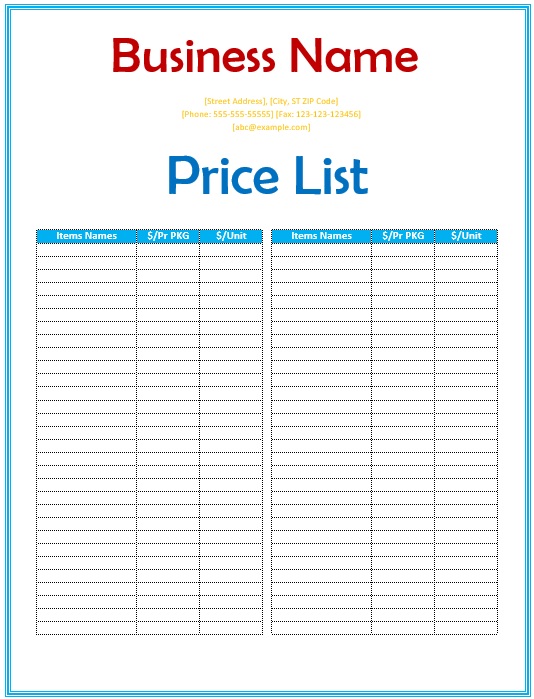
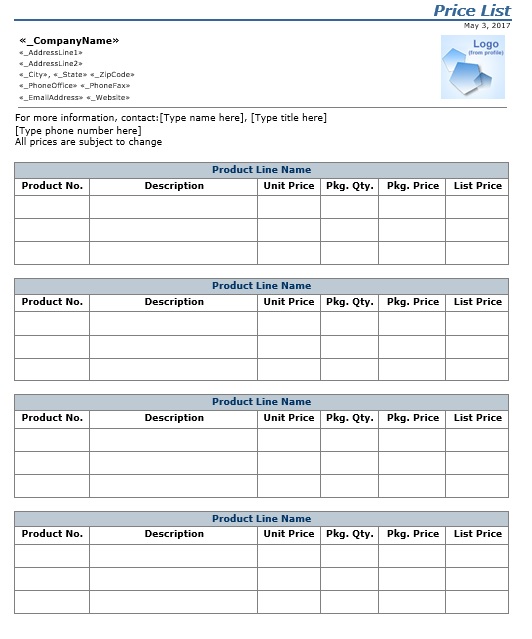
The following ten templates come from the existing PrintableSample wholesale price list collection. The first six are identified as Microsoft Word formats, while the final four are Microsoft Excel templates.
Word templates can work well for compact product catalogs or printable handouts. Excel is usually more convenient when you have many products, changing prices, quantity tiers, or inventory-related information.





9. Wholesale Inventory Price List

File Type: MS Excel (ZIP File)
Source: templateinn.com
10. Wholesale Product List Template
File Type: MS Excel (ZIP File)
Source: exceltemplates.net
How to Create a Wholesale Price List
Start by deciding which products are available at wholesale rates. Some businesses offer their entire catalog to trade customers, while others restrict wholesale pricing to selected product lines, pack sizes, or stock quantities.
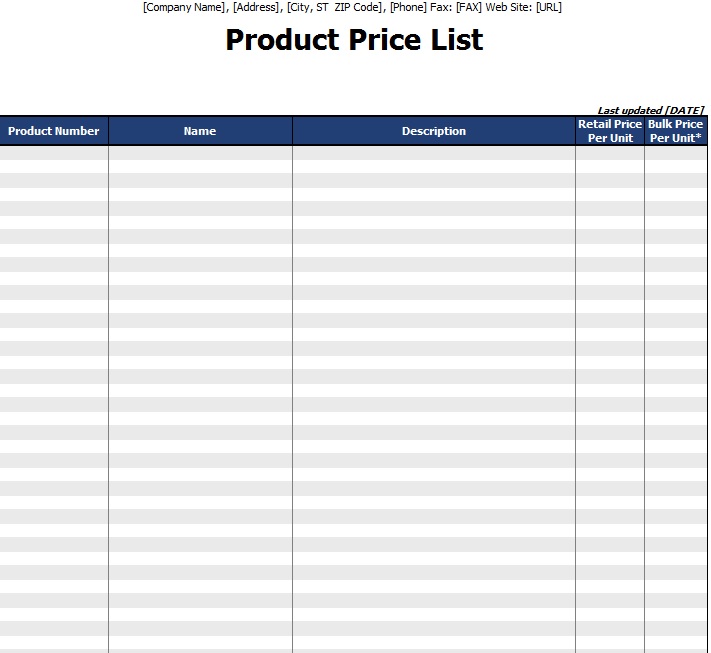
Then create a clean product table. A practical structure might include columns for SKU, product name, description, unit or case size, minimum order quantity, wholesale price, and any volume-discount tiers.
Do not make the buyer search through paragraphs to find the prices. Wholesale customers usually need to compare many products quickly, so a table or spreadsheet layout works better than long descriptive text.
Use Consistent Product Codes
A consistent SKU or item-code system reduces ordering errors. If you sell products in different sizes, colors, flavors, or styles, assign a separate code to each variation where appropriate.
State the Minimum Order Clearly
If your wholesale program requires a minimum order, place the requirement near the top of the price list or beside the relevant product.
For example, you might require a minimum of 12 units per SKU, one full case, or a total order value of a specified amount. Buyers should know this before they calculate an order.
Separate Discounts from Base Wholesale Prices
If you provide additional volume discounts, list them separately from the standard wholesale rate. This prevents buyers from assuming that the lowest possible price applies to every order.
Using Tiered Wholesale Pricing
Tiered pricing allows the unit price to decrease when the buyer purchases larger quantities. It is commonly used when larger orders reduce handling, packaging, fulfillment, or sales costs for the supplier.
A simple pricing table might look like this:
- 12-24 units: standard wholesale price
- 25-49 units: volume discount price
- 50-99 units: higher-volume price
- 100+ units: best published bulk rate
The actual quantities and discounts should be based on your own costs and sales strategy. Avoid copying pricing thresholds from another business without checking whether they make financial sense for your products.
Wholesale Price List vs. Quotation
A wholesale price list is usually a reusable document that shows standard trade pricing for multiple products. A quotation is more specific and is typically prepared for one customer, one order, or one set of requested quantities.
If a customer wants a large custom order, special packaging, unusual delivery terms, or pricing outside the published tiers, you may issue a separate quotation rather than changing the standard price list.
This distinction is useful because it keeps your public or trade price list consistent while still allowing you to prepare customized offers when necessary.
Wholesale Price List vs. Inventory List
A wholesale price list focuses primarily on what buyers can purchase and what they will pay. An inventory list focuses on stock quantities, locations, reorder levels, or other internal inventory information.
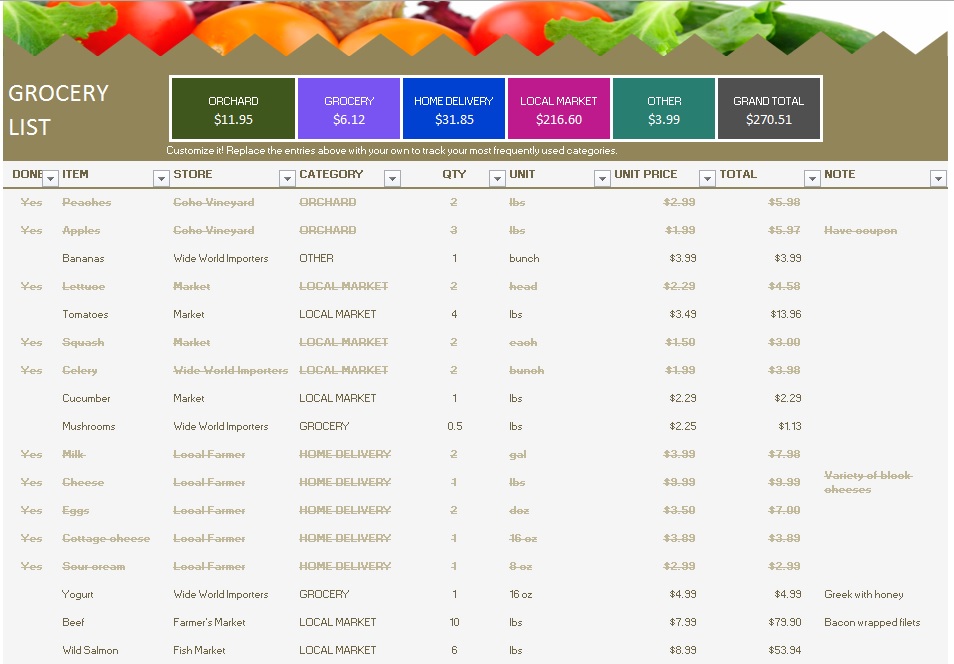
The ninth template in this collection combines pricing and inventory-style information, which can be useful for businesses that want one spreadsheet to manage both stock and wholesale pricing.
Tips for Maintaining Wholesale Prices
Wholesale price lists should be reviewed whenever product costs, freight charges, packaging expenses, taxes, or supplier rates change. A price list that is several months out of date can create serious margin problems if customers continue ordering at old rates.
Add an Effective Date
Place an effective date on every version of the price list. This helps buyers and staff confirm that they are using the current document.
Keep One Master Version
Maintain one controlled master file rather than allowing several staff members to create separate versions. When prices change, update the master document and replace older customer copies where practical.
Review Margins Before Publishing Discounts
Do not choose wholesale discounts based only on what competitors appear to charge. Calculate product cost, packaging, labor, payment fees, shipping responsibilities, and other expenses before setting a rate.
Use Excel for Larger Catalogs
For businesses with many SKUs or frequent price changes, Excel can be easier to maintain than a Word document. It allows products to be sorted, filtered, calculated, and updated in a structured table.
If your business only needs a compact customer-facing list rather than complex bulk pricing, you may prefer one of our broader price list templates.
Frequently Asked Questions About Wholesale Price Lists
1. What is a wholesale price list?
A wholesale price list is a document showing the prices and ordering conditions offered to bulk buyers, retailers, distributors, resellers, or other business customers.
2. What should be included in a wholesale price list?
Useful fields include the company name, SKU or product code, product name, description, unit or case size, minimum order quantity, wholesale price, pricing tiers, effective date, and important payment or ordering terms.
3. What is a minimum order quantity?
A minimum order quantity, often abbreviated as MOQ, is the smallest quantity a buyer must purchase to qualify for a particular wholesale product or price.
4. Should retail prices be shown on a wholesale price list?
They can be, but it is not required. Some suppliers show retail or suggested retail prices so resellers can estimate margins, while others distribute a wholesale-only price list.
5. What is tiered wholesale pricing?
Tiered pricing means the price changes according to the quantity ordered. Larger orders may receive a lower per-unit rate than smaller wholesale orders.
6. Can I make a wholesale price list in Excel?
Yes. Excel is especially useful when you have many products, pricing tiers, calculations, or frequent updates. Four of the templates on this page are identified as Microsoft Excel formats.
7. How often should wholesale prices be updated?
Review prices whenever product costs or other important expenses change. It is also useful to carry out a regular periodic review so outdated rates do not remain in circulation.
8. Should a wholesale price list have an expiration date?
You can use either an expiration date or an effective date with a statement that prices are subject to change. The best approach depends on how frequently your costs and prices change.
9. Is a wholesale price list the same as a quotation?
No. A price list usually contains standard published rates for multiple products, while a quotation is normally prepared for a specific buyer or order.
10. Can different customers receive different wholesale prices?
Yes, businesses may use different pricing levels based on order volume, customer type, contracts, distribution arrangements, or other commercial terms. If pricing varies, document the applicable conditions clearly so buyers understand which rates apply.
